Showing posts with label concise writing. Show all posts

Monday, November 26, 2012

Outlining Your Novel may just map your way to success


Book/Product Review
Outlining Your Novel, Map Your Way to Success by K.M. Weiland
ISBN 978-097-892-462-1
186 pages ©2011 $9.95

"Outlining is the dry erase board where we unveil our ideas and see how they line up on the page."

According to K.M. Weiland, outlining has many benefits and encourages wide open throttle creativity once it's in place. 

After reading this book, I'm convinced outlining, of some sort, is the work, the preparatory work, of a good novel or non-fiction worked.

With an outline, Weiland informs, cajoles and encourages, you ensure balance and cohesion, prevent dead end ideas form ever getting half written to flounder and die. You see places to foreshadow novel events with an outline. The writer can smooth out the pacing, maintain consistent character voice throughout so readers come to know and like your character, if not trust them.

Character motivation drives the story toward a satisfying conclusion. Seeing the whole picture in outline form allows you to tweak and adjust and show character motivation, as necessary and encouraged.
Each chapter of this book has a check list the writer/reader can use to keep tabs on her progress. Interviews with best-selling authors, how they outline, and why separate the chapters and give the book an added sense of authority.

Whether you are writing your first book or your fiftieth book, you will find tips to make your next book the best yet. The ugly duckling of outlining will change your mind as you see the swan emerge from the dark dust of your right and left brain battle to write the next best seller.

I highly recommend "Outlining Your Novel", for anyone with dreams of writing. Especially, perfect if you're gearing up for the annual National Novel Writing Month in November or any or the other challenges that writers face, like deadlines.

Tuesday, December 27, 2011

The First Rule of Creativity


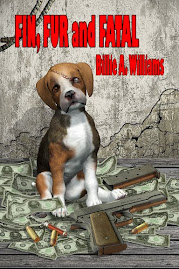
Amazon Buy Link
The first rule according to Kurt Vonnegut is Do not use the semicolon. He adds this reason, "...they are transvestite hermaphrodites representing absolutely nothing. All they do is show you've been to college."
In case you don't know what hermaphrodites are - according to the Oxford English Dictionary they are representing themselves as Male and Female - so as with Vonnegut's quote they are nothing - even while they seem to be everything.

The rule of thumb is if MS Word puts in a semicolon rework your writing into shorter sentences--single idea, single topic, simple sentence. Which is always much more affective than a complex multidimensional sentence. Noun + action is the preferred concept.

So spare the semicolon and raise good sentences.
Do you agree with Mr. Vonnegut?

Monday, August 8, 2011

Character Sketch for Jamie Dakota

Watch For The Raven
I found Jamie's last name as I was doing her character sketch so she is now officially Jamie Dakota - here is her character sketch so far.
=====================================


Character Sketch for Jamie Dakota
Cancer: Mother or child. I Feel;  June 24 is her Birthday
Sign of home and family; Water Sign (ruled by the moon)
Color: Silver
Famous People Born under this sign: Princess Diana, Helen Keller, Rembrandt, Bill Cosby and Tom Hanks

Strengths: sensitive, protective, nurturing, psychic, self-protective, maternal, intuitive, deeply feeling, attuned to the unconscious, soft hearted, Comforting, receptive, empathetic, consoling, responsive, family oriented, rooted, shrewd, appreciative of the past, cautious thinking. Thrifty.

Weaknesses: Possessive, smothering, pampering, suffocating, hypersensitive, overly emotional, easily hurt, cry baby, overly-impressionable, childish, touchy, selfish, pathetic, martyr
Like, indulgent, secretive, withdrawn, clinging, helpless, and passive.

Birch Tree: (The Inspiration) vivacious, attractive, elegant, friendly, unpretentious, modest, does not like anything in excess, abhors the vulgar loves life in nature and in calm, not very passionate full of imagination, little ambition creates a calm and content atmosphere.

June People: Think for with vision, easily influenced by kindness, polite, soft spoken, having lots of ideas, sensitive, active, active mind, hesitating, tends to delay, choosey, and always wants the best. Temperamental. Funny and humorous; 

Loves to joke, good debating skills Talkative, daydreamers, Friendly, knows how to make friends. Abiding, able to show characters Easily hurt. Prone to getting colds loves to dress up. Easily bored. Fussy, seldom shows emotions takes time to recover when hurt. Brand conscious Executive, Stubborn.

NOTE: This is a thought I had as I ran across her weakness for colds. JAMIE SEES Doctor he’s a holistic medical doctor; working at a clinic he is impatient with delay... Dr. interested in culture and lore of American Indians he is from the country of India.

My take on Jamie is she fits the character mold for a Plucky Lass 
Everyone loves her, she makes friends easily .
Loyal, but not in a plodding way. She’s adventurous and spirited with loads of talent and wit. She’s a hard worker, but not because she needs to win, she’s more interested in doing a great job just because she wants to. You won’t find her climbing the corporate ladder, more likely she’ll own that charming little gift shop on the corner or she’ll find an independent niche as a journalist or caterer. Whatever she does it will likely involve creativity and a lot of interaction with people because that’s what she does well. 

There we have a great start for Jamie but I will still do an interview with her. I will, however, do a character sketch for the antagonist before I do.  I will have a couple links for great places to find character charts on line for you later. 
Write like the wind.
Billie

Saturday, June 9, 2007

Creating a Movie in Your Readers Mind

Create a Movie in Your Reader's Mind
By Billie A Williams
While I was re-reading some material on script writing this morning I came upon some very interesting information that I wanted to share with you. You know how everyone tells a writer, show don't tell, how they say don't use weasel words - make your nouns and verbs strong enough to stand the test without the anchors that drag your story down. Well here are some great examples -- and a quote from the movie Finding Forrester

"No thinking--that comes later. You must write your first draft with your heart. You rewrite with your head. The first key to writing is...to write, not to think!"

That's exactly it about the first draft of your story, novel, or poem too--you really do need to just dump it all down onto the page and worry about the exact wording later. Look at this from "The Longest Night, by Eric Heisserer "...Gormand, as oily and wrinkled as a gas station dollar bill..."and farther along..." Bundled against the cold." ...A sign welcomes him to Barrow, Alaska the most northern town in the USA..."A mote of civilization on the ass of Old Man Winter." "...an orange smear of a sun slowly collapses on the horizon." You can almost feel the chill following that orange smear.

How colorful, how powerful -- you can visualize what this man is seeing so clearly - in your writing, this is what you want to emulate. Not flowery, adverb and adjective cluttered, cliche riddled writing, but clear, concise, decisive writing.

How about this phrase "he's a pit bull with a badge". You know immediately what this fella looks and acts like don't you? Reading the works of the masters will show you the way to make your writing that true. Take note too, that writing is genre specific. The way you say something in a romance novel is not the way you would say it in a thriller or horror story. Try describing a sunset or a sunrise in both. If you use it to create a mood for that story – you know you will have totally incongruent descriptions or at least you should. Colorful, dreamy, feel good sunrise:

Let’s try it. Lavender threads pulled the sun leisurely to the horizon as a mist settled over the valley. Angelica stirred and realized a body shared her bed and this early morning, she smiled and reached out to place a hand on Spade’s shoulder. [Romance]

Foreboding, expectant: Lavender streaks spiked across the sky interrupting the orange glow slashing through the pre-dawn. Angelica stirred and realized a body shared her bed, panic instantly knotted her insides. She slowly reached to pull the sheets tightly around her as Spade’s broad shoulders were silhouetted in the light sneaking through the sliding glass patio doors. A heavy haze cloaked the landscape giving it a surreal look as she slipped quietly from the bed trying not to disturb him. [Suspense]

I’m visualizing the same morning through the same window and sunrise – but from different plans for a story. Romance and then suspense/horror. Can you feel the difference?

When you work to rewrite your story, do it from several passes through the work. Don’t try to do it all at once. Check the format – is it properly put together. Then check the story, is there continuity, does it flow, is it cohesive, are there places where the flow is interrupted that you can smooth out. Can you make better transitions; get us from one place to another better?

Next take a look at your characters. Can you tell them apart? Do they have their own idiosyncrasies, their own language that helps the reader keep the players straight? Do they stay true to character? Does their dialogue lead you forward – cut any useless, word-padding verbiage?

Now read through for a look see at your action. Is it moving the story forward at a good pace—do you race where you should and pause where the reader needs to take a breath? The pause can be narrative, a reflective paragraph or two, a hint of comedy to lighten tenseness. Keep in mind your reader cannot remain on an concentrated, highly-charged peak indefinitely—he needs some relief for your story to continue to be page turning. Too much suspense, too much romance, too much of anything bogs the story down. Your reader will close the book never to return or throw it against a wall vowing never to pick up a book by this author again.

While you are doing these pass throughs is the time to tweak the words so they say exactly what you mean, exactly the emotion, the feel, the sentiment you want to leave your reader with. As film producers will tell you, it’s the last 20 – 30 minutes that makes the movie memorable — so too should your last 20 - 30 pages be your memorable ones. Send you reader off satisfied and waiting for your next novel, short story or poem....or script.

=====================================================================
Feel free to share this article with your list, friends, or whoever as long as you leave this resource box attached. Thank You!
Billie A Williams is a Mystery Suspense author, but she also writes in other genres you will find her work at http://www.billiewilliams.com/ or her blog http://printedwords.blogspot.com/ or the writers group she owns http://www.word-mage.com/ . You can send her an email at billie@billiewilliams.com

Thursday, April 26, 2007

Put Your Writing On a Diet


Keep it Fat Free –

By Billie A Williams © 2007

What do I mean by putting your writing on a diet? Use precise word choices…use a dictionary or thesaurus to make sure you are creating an image true to what you are trying to convey. If you say dog – I may see my Chow, you may see beagle or poodle. If it’s important to know exactly what kind of dog, car, shoes, whatever – use precise words. Don’t fudge with a general term.

And don’t use three words where one will do. Unnecessary words might increase your word count but it won’t necessarily improve the readability of your work. The editor will strike them out if she even accepts your work with all the padding. There are lists of those you can find by doing a search in Google – the “because of the fact that” use "because"- “I hope to hear from you in the near future” use "soon". You get the idea.

Another way to trim the fat and keep the beef is to avoid unhelpful repetition or redundancies. Sometimes you repeat things without realizing it. Go back through your copy and prune those out wickedly—allow not one to remain. Tight, precise, concise is what you are looking for. Your writing will be stronger for it.

Figures of speech can be colorful additions; they can say more in fewer words. Metaphors, similes, or other figures of speech are easily recognized by the reader and they “get” the picture in an instant. Of course, you need to be sure that you are using appropriate metaphors or similes – not contrived or amateurish, like the list of High School flubs English teachers collected—“Her hair glistened like nose hair after a sneeze,” you get the picture eeeow! Is my first reaction and I’d call that a very bad metaphor.

Raise the intensity of the words you use by choosing strong verbs that express exactly the action you intend to convey. Don’t belabor the page with coaching adverbs. You can use them, but very sparingly as they tend to weaken and confuse not enhance the writing.

As with adjectives, if you are going to tell us her eyes were a pretty blue – why not say her eyes were the color of a Colorado summer sky – or the faded chambray work shirt your grandpa wore. Pretty tells us nothing, blue comes in a million shades—give us precise color.
When you put your writing on a diet it looks good in print (in the mirror). You feel good about it because it is trim and toned to precision. It puts your best foot forward and nearly guarantees a sale and a reading fan.

Write Well
Feel free to share this article just leave the resource box in tact.
Billie A Williams, Author/Freelance Writer
http://www.billiewilliams.com/
http://printedwords.blogspot.com/
http://YouTube.com/basbleu43